
Why Cheap Hair Clips Break So Fast
It usually happens at the worst possible moment.
You’re rushing out the door, twisting your hair into a quick updo, and suddenly—snap. The clip breaks in your hand. Sometimes it’s the spring that gives out. Sometimes the teeth crack. Other times the entire clip seems to shatter after only a few weeks of use.
If you've ever wondered why cheap hair clips break so fast, you're not alone.
With hair accessories becoming a daily essential rather than an occasional styling tool, more women are beginning to pay attention to what their clips are actually made of—and why some last for years while others barely survive a season.
The answer comes down to three things:

materials, construction, and design.
And understanding these differences can completely change how you shop for hair accessories.
The Hidden Cost of Cheap Hair Clips
At first glance, many hair clips look almost identical.
A claw clip from a fast-fashion retailer might appear similar to a premium acetate clip. They may even share a similar shape or colour.
But what you don't see is often what determines how long the clip survives.
Many inexpensive hair clips are manufactured with cost reduction as the primary goal. Materials are chosen because they are cheap to produce, not because they are durable.
This often leads to:
- brittle plastic
- weak spring mechanisms
- poor structural support
- rough edges
- low resistance to daily wear
The result is an accessory that looks acceptable initially but struggles under regular use.
The Problem with Low-Quality Plastic
One of the biggest reasons cheap hair clips break is the material itself.
Many mass-produced clips use lightweight injection-moulded plastic. While inexpensive to manufacture, this material tends to become brittle over time.
Daily pressure from opening and closing the clip gradually weakens stress points around:
- hinges
- teeth
- spring attachments
- jaw edges
Eventually, the plastic develops small fractures that lead to cracks or complete breakage.
This is particularly common for women with:
- thick hair
- long hair
- high-density hair
- curly hair
The more tension placed on the clip, the faster these weaknesses become visible.
Why Premium Acetate Makes a Difference

One of the reasons luxury hair accessories last significantly longer is the use of cellulose acetate.
Unlike cheap plastic, acetate is stronger, more durable, and far more resistant to everyday stress.
Premium acetate offers:
- greater flexibility
- improved structural integrity
- richer colour depth
- smoother finishes
- increased longevity
This is why well-made acetate clips often maintain both their appearance and performance for years.
When you hold a quality acetate clip, the difference is immediately noticeable. It feels more substantial, more balanced, and more refined.
More importantly, it performs differently under pressure.
The Spring Matters More Than You Think
When people think about broken hair clips, they often focus on the outer material.
But one of the most common failure points is actually the spring.
A weak spring loses tension over time. Once that happens, the clip no longer grips the hair properly.
This creates a cycle:
The clip slips.
You tighten it repeatedly.
More stress is placed on the structure.
Eventually something breaks.
Higher-quality clips use stronger spring mechanisms designed for repeated opening and closing without losing effectiveness.
A good spring doesn't just improve hold—it extends the life of the entire accessory.
Why Hair Thickness Changes Everything
Not all hair clips are designed for all hair types.
A clip that works perfectly for fine hair may struggle with thick or dense hair.
When a clip is too small for the amount of hair it's holding, excessive pressure builds across the jaw structure. This creates stress at the weakest points.
Over time, that stress can lead to:
- broken teeth
- cracked hinges
- warped shapes
- spring failure
This is why choosing a clip designed for your hair type is just as important as choosing quality materials.
A properly sized clip distributes tension more evenly, reducing wear while improving comfort.
Poor Design Often Leads to Breakage

Material quality matters—but so does design.
A well-designed clip isn't simply beautiful. It's engineered.
Good clip design considers:
- jaw shape
- weight distribution
- tooth placement
- spring positioning
- opening angle
When these elements work together, tension is spread evenly across the clip.
When they don't, certain areas absorb too much pressure and become vulnerable to breakage.
This is often why two clips that look similar perform completely differently.
The difference isn't always visible—but it's felt every time you use them.
Why Smooth Finishes Protect Both Hair and Accessories
Cheap clips often have rough edges or poorly finished surfaces.
While this may seem cosmetic, it affects performance significantly.
Rough edges can:
- snag hair
- increase friction
- create uneven pressure
- accelerate wear
Premium hair accessories are typically polished and finished more carefully, resulting in smoother contact with the hair and reduced strain on the clip itself.
This benefits both the accessory and the person wearing it.
The Sustainability Problem Nobody Talks About
Cheap accessories often seem economical in the moment.
But if a clip breaks every few months, you're repeatedly replacing the same item.
Over time, this creates:
- higher overall spending
- more waste
- more frustration
A single well-made hair clip can often outlast numerous lower-quality alternatives.
This is one reason many women are moving toward a "buy better, buy less" approach when it comes to accessories.
Instead of constantly replacing broken clips, they're investing in pieces designed to last.
What to Look for When Buying a Hair Clip
If you're trying to avoid breakage, a few details are worth paying attention to.

Look for:
Premium materials
Cellulose acetate is generally more durable than standard plastic.
Strong spring construction
The spring should feel secure and maintain consistent tension.
Balanced design
A clip should distribute pressure evenly rather than concentrating it in one area.
Smooth finishing
Well-polished edges help protect both the clip and your hair.
Hair-type compatibility
Choose a size and structure that matches your hair density and styling habits.
These factors often make a bigger difference than appearance alone.
Why Quality Becomes Obvious Over Time
The true value of a hair clip isn't measured on the day you buy it.
It's measured months later.
When it still opens smoothly.
When it still grips securely.
When it still looks beautiful.
When you're reaching for it every morning without thinking.
That's where quality reveals itself.
Not through trends or marketing—but through daily use.
Final Thoughts
Cheap hair clips break quickly because they're often built around short-term cost savings rather than long-term performance.
Lower-quality plastic, weaker springs, poor design, and inadequate construction all contribute to premature wear and breakage.
By contrast, premium acetate clips with strong springs and thoughtful engineering are designed to withstand everyday life.
And when you rely on a hair accessory almost every day, that difference matters.
Because the best hair clip isn't the one that simply looks good.
It's the one that's still holding your hair beautifully long after the cheap alternative has snapped.
Mots clés:
Précédent
The Chic Hair Accessories Fashion Girls Are Wearing This Summer
Suivant
The Difference Between Acetate and Plastic Hair Clips
Articles Liés
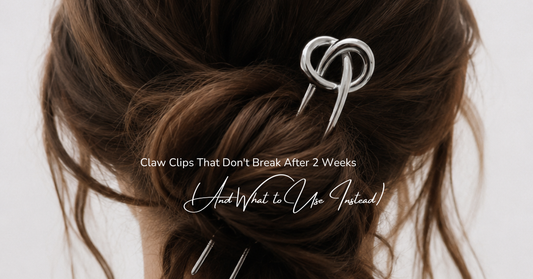
Claw Clips That Don't Break After 2 Weeks
Jul 09 2026